

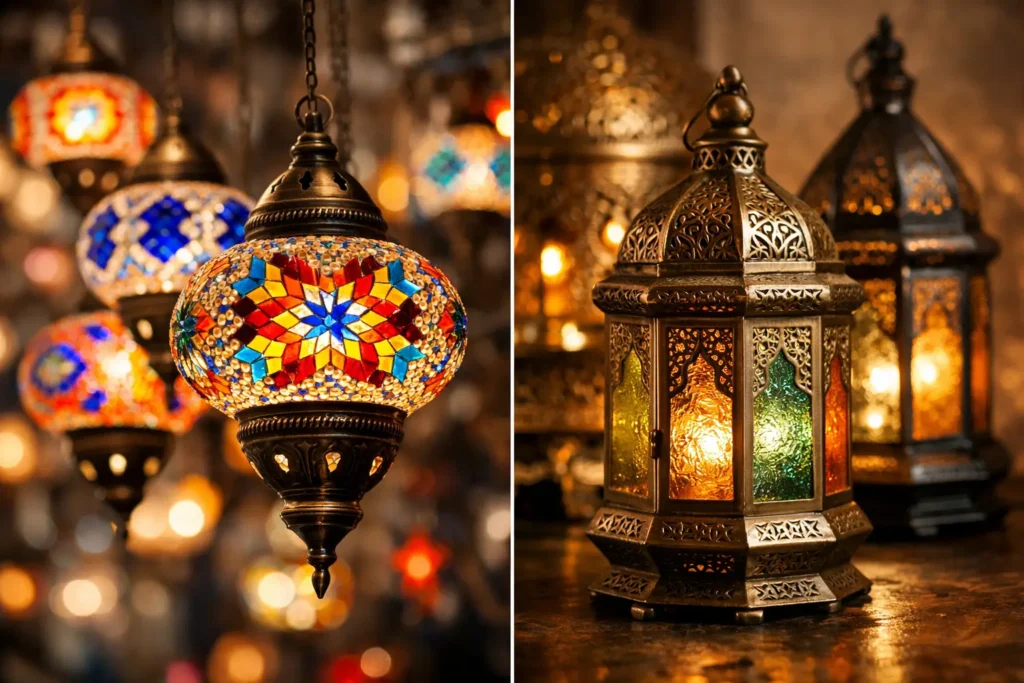
Some lighting blends into a room. Some lighting changes the room the second you turn it on. That is exactly why Turkish lamps versus Moroccan lamps is such a meaningful comparison for design-minded homeowners. Both bring handcrafted beauty, global character, and a warm sense of atmosphere, but they do it in very different ways.
If you are choosing a statement piece for a living room, entryway, bedroom, dining area, or boutique-style space, the difference matters. The right lamp does more than illuminate a corner. It sets the mood, shapes the palette, and tells your guests that your home was curated with intention.
Turkish lamps versus Moroccan lamps: the visual difference
At first glance, Turkish and Moroccan lamps may seem to belong to the same design family. Both are richly decorative, artisanal, and rooted in centuries of craftsmanship. But once you look closer, their personalities separate quickly.
Turkish lamps are known for mosaic glass, intricate patterns, jewel-toned globes, and glowing color. They often feature hand-cut pieces of glass set into geometric or floral motifs, creating an illuminated surface that feels lively, layered, and radiant. A Turkish mosaic lamp does not simply cast light – it projects personality. Even when it is off, it reads as a decorative object.
Moroccan lamps usually lean more architectural. You will often see pierced metal, filigree detailing, lantern silhouettes, and a stronger emphasis on shadow play. Their beauty comes from the relationship between metalwork and light. Instead of colorful glass mosaics stealing the scene, Moroccan lamps often create drama through shape, perforation, and pattern cast onto nearby walls.
That difference is important if you are styling around color. Turkish lamps naturally become part of the room’s palette. Moroccan lamps tend to work more through texture, silhouette, and atmosphere.
Which style feels more expressive?
If your goal is a room that feels layered, vivid, and full of character, Turkish lighting usually delivers a more expressive visual impact. The colors can be bold or soft depending on the globe selection, and that flexibility makes a difference in real homes. A deep blue and amber mosaic table lamp creates an entirely different feeling than a white and gold globe or a multicolor chandelier.
This is where customization becomes such a powerful advantage. With Turkish lighting, especially mosaic chandeliers, pendants, and table lamps, you often have room to shape the final look around your furniture, wall color, or seasonal styling. That makes the piece feel personal rather than just imported.
Moroccan lamps are expressive too, but in a quieter, moodier way. They are often perfect for homeowners who love neutral interiors, earthy palettes, and layered metal accents. If your room already has strong textiles, patterned rugs, or carved wood furniture, a Moroccan lantern can feel beautifully grounded. If your room needs a single piece that brings instant color and artistic sparkle, Turkish lighting tends to make the stronger statement.
Craftsmanship and material character
One of the joys of buying artisanal lighting is that no two pieces feel exactly alike. Handcrafted work carries slight variations that add soul, and both Turkish and Moroccan lighting traditions offer that sense of authenticity.
Turkish lamps often center their artistry on hand-laid mosaic glass, beading, metal frames, and carefully assembled globes. The workmanship is visible up close and from across the room. You see the individual pieces. You notice the pattern choices. You feel the human hand in the finish.
Moroccan lamps often showcase handworked brass or metal, cutouts, embossing, and lantern construction. Their craftsmanship can be stunning, especially in pendant and hanging forms, where the structure itself becomes part of the décor.
The trade-off comes down to the kind of detail you want to celebrate. Turkish craftsmanship is often color-forward and luminous. Moroccan craftsmanship is often metal-forward and sculptural. Neither is inherently better. It depends on whether you want your lighting to glow like jewelry or stand like architecture.
Light quality and mood in the room
This is where the choice becomes practical, not just stylistic.
Turkish mosaic lamps tend to soften and warm the light beautifully. Colored glass can create a romantic, layered glow that feels cozy at night and visually rich during the day. In bedrooms, reading corners, and intimate dining spaces, that effect can be absolutely enchanting. A larger Turkish chandelier can also create a dramatic focal point while still keeping the room welcoming rather than harsh.
Moroccan lamps often create more shadow definition. The pierced metal patterns can produce striking projections on ceilings and walls, especially in dimmer settings. That can be stunning in hallways, powder rooms, covered patios, or lounge spaces where atmosphere matters more than task lighting.
If you need one fixture to function as both décor and everyday ambient light, Turkish lamps often feel more versatile. If you want lighting that creates a moody, exotic pattern effect, Moroccan pieces can be especially compelling.
Where Turkish lamps tend to shine
In North American homes, Turkish mosaic lighting often adapts very well to a wide range of interiors. It works surprisingly beautifully not only in globally inspired homes, but also in transitional spaces, bohemian rooms, eclectic condos, colorful coastal settings, and even modern interiors that need one warm, expressive accent.
A Turkish table lamp can soften a sleek console. A mosaic floor lamp can bring life to an underused corner. A multi-globe chandelier can become the heart of a dining room or staircase. Because the form options are so broad – table lamps, sconces, floor lamps, pendants, chandeliers, and ceiling lights – it is easier to carry the look through multiple rooms without repeating the exact same effect.
That range matters when you want your home to feel collected, not themed. You can choose a dramatic chandelier for one space and a more delicate lamp for another, all within the same design language.
Where Moroccan lamps often work best
Moroccan lighting can be especially striking in spaces that benefit from a lantern-like presence. Think entryways with tall ceilings, intimate outdoor-adjacent areas, reading nooks with earthy textures, or dining spaces built around plaster, wood, leather, and natural fiber. The metalwork often feels especially at home in interiors that already lean warm and tactile.
If your style is minimalist but not cold, a Moroccan lamp can be the perfect bridge. It introduces ornament without relying on bright color. It adds pattern without asking the rest of the room to compete.
The limitation, for some shoppers, is versatility across brighter or more color-driven interiors. Moroccan lamps can absolutely work there, but they usually support the space rather than transforming it. Turkish mosaic lighting is more likely to become the star.
Turkish lamps versus Moroccan lamps for modern homes
Many shoppers worry that handcrafted global lighting will feel too traditional. In reality, both styles can work in modern homes when used thoughtfully.
The key is contrast. In a clean-lined room with neutral furniture, one richly detailed lamp becomes even more dramatic. A Turkish mosaic pendant over a modern dining table can feel fresh rather than old-world, especially if the colors are curated. A Moroccan lantern in a streamlined hallway can create a refined, moody counterpoint to minimalist architecture.
Still, Turkish lighting often gives you more design flexibility because color can tie directly into artwork, pillows, rugs, or cabinetry. If you are decorating a contemporary condo or updated suburban home and want a handcrafted piece that still feels highly intentional, Turkish lamps usually offer the easier path.
Which one is right for your space?
If you want colorful radiance, visible hand-laid detail, and a true conversation piece, Turkish lamps are often the stronger choice. They bring warmth, movement, and a sense of celebration to everyday rooms. They also offer more opportunities for personalization, which matters when you are investing in statement lighting instead of settling for something generic.
If you prefer sculptural metalwork, patterned shadows, and a more understated exotic mood, Moroccan lamps may be the better fit. They can feel elegant, grounded, and atmospheric in all the right ways.
For shoppers who want lighting that feels artistic, luxurious, and distinctly personal, Turkish mosaic designs often have broader decorating potential. That is one reason they continue to captivate homeowners, designers, and gift buyers alike. At Whispers of Istanbul, that sense of artistry is part of the magic – statement lighting that feels handcrafted, expressive, and ready to leave a room transformed.
The best choice is the one that makes your space feel more like you, because the most memorable rooms are never built around ordinary light.
